
Tracekit
Tracekit records what your AI agents do, decides each tool call before it runs, and gives you a signed record anyone can verify offline: tamper-evident tracing, policy gates and cross-checks for AI agents. - Cygnux-Labs/Tracekit
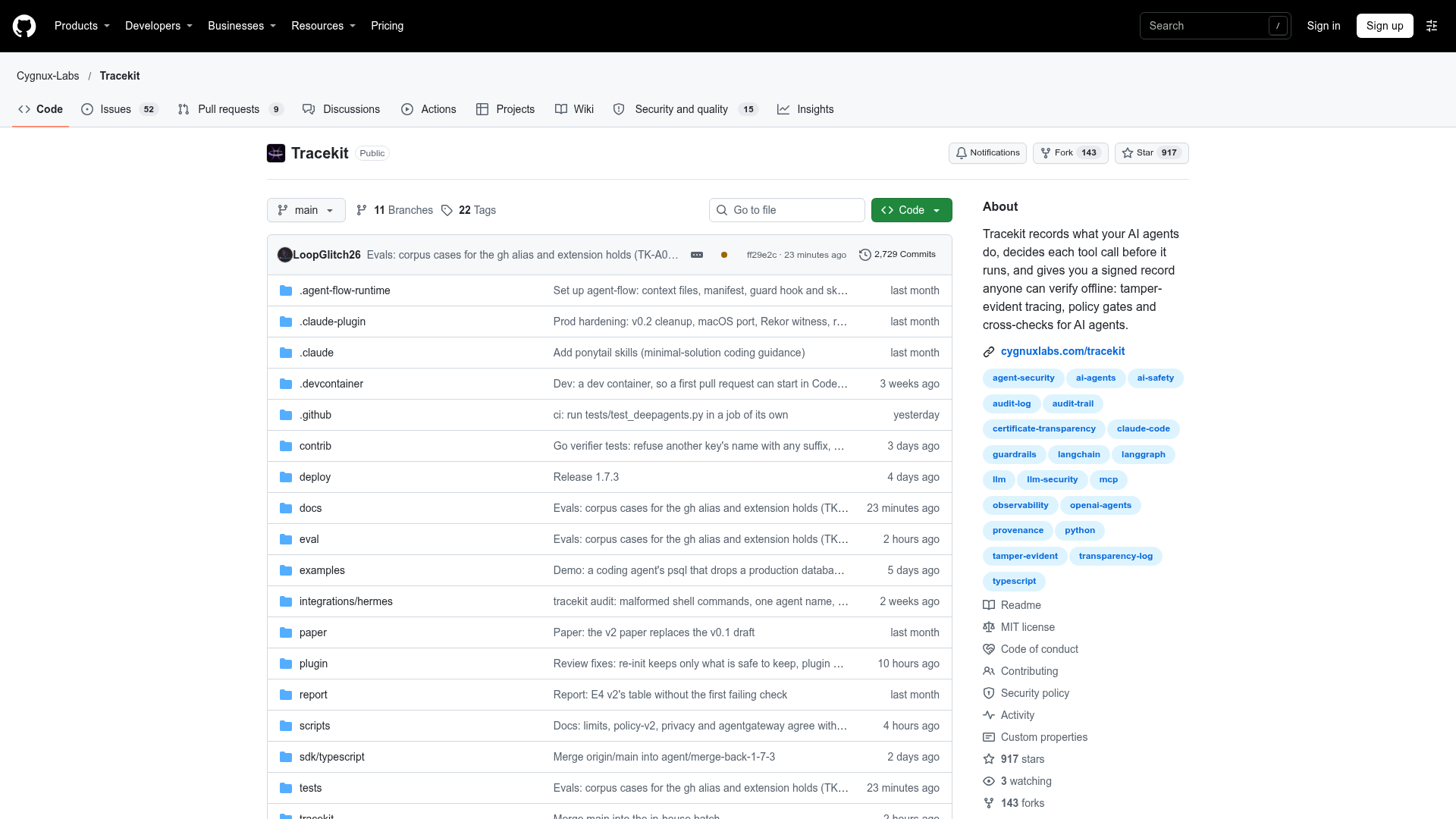
Tracekit at a Glance
- How you use it
- Repository with agent hooks, adapters, plugins and SDKs
- Who it's for
- People building or operating AI agents
- Works with
- LangChain LangGraph Claude Code
Tracekit Key Features
- Agent cross-checks
- Agent tracing
- Offline verification
- Signed records
- Tool-call policy gates
Can't Find What You're Looking For?
We build custom AI agents tailored to your specific business needs. From ideation to deployment, TinyAI.Tools is your partner in AI innovation.
No commitment required. Let's discuss your ideas.
Tracekit Alternatives
Asqav
Signed, tamper-evident receipts for AI agent actions. Answer customer security reviews and audits with records anyone can verify, without trusting your logs.

caracal
The identity and authorization layer for AI agents. Agents never hold credentials: every action is policy-approved before it runs, delegation can only narrow, and a tamper-evident audit trail proves what happened.
APort Guardrails
Deterministic pre-action authorization for AI agents. Guardrails run before tool execution, so prompt injection cannot bypass policy checks. - aporthq/aport-agent-guardrails
Pidgeon
Pidgeon gives AI agents a global ID card that anyone can check. Free and open-source.

node9
Access control for AI agents. You decide what your agents can do; node9 enforces it before they act: allow, review or block each tool call, with every decision on the record. Works with Claude Code, Codex, Cursor and more.

Guardrails AI
The AI Reliability Platform