
Langroid
Multi-Agent framework for building LLM Applications.
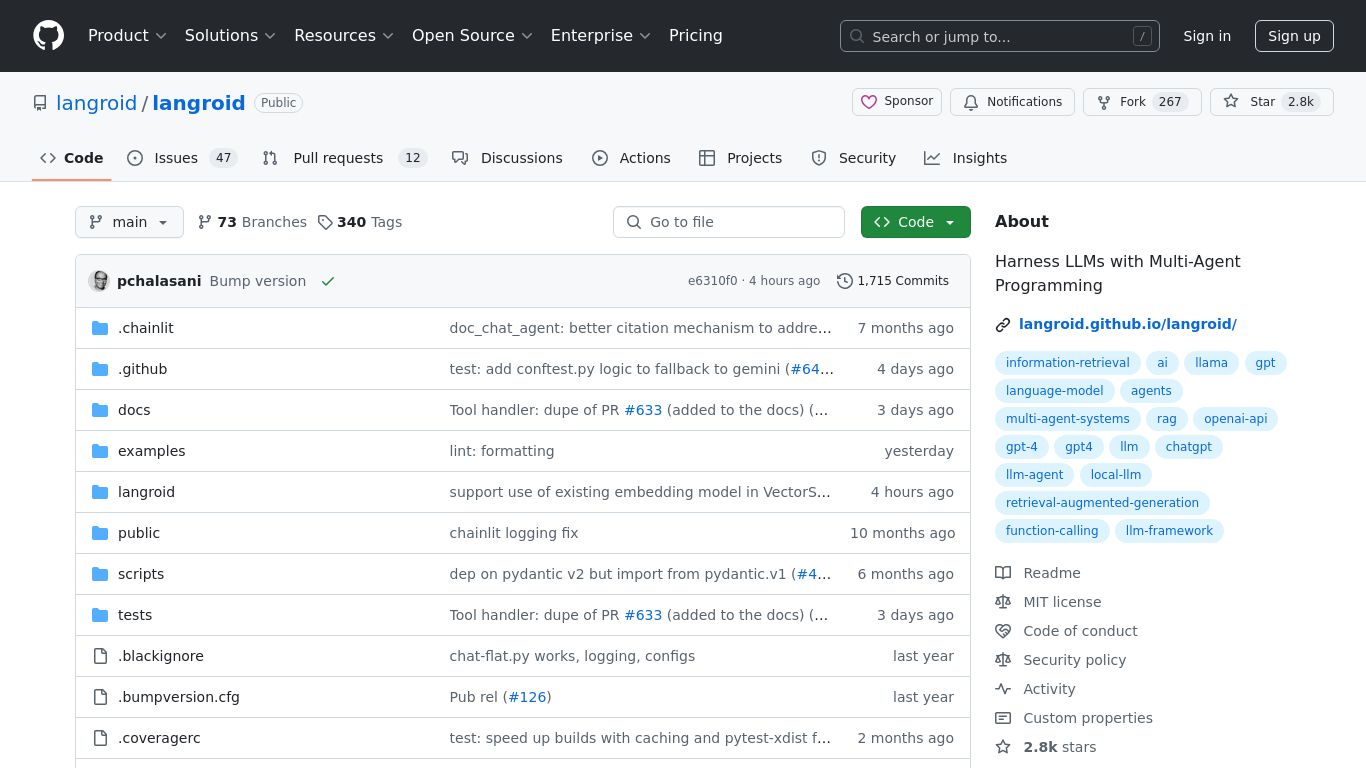
Langroid at a Glance
- Pricing
- Free
- On GitHub
- 4,122 stars · MIT licence · last updated Oct 2026
Website last checked 28 Oct 2026
Langroid Key Features
- Caching of LLM responses
- Document and table querying capabilities
- Function-calling and tool/plugin support
- Integration with vector-stores (LanceDB, Qdrant, Chroma)
- Multi-Agent Collaboration
- Observability and logging of interactions
- Structured output generation
- Support for various LLMs (OpenAI and others)
Langroid Use Cases
- Building LLM-powered applications
- Collaborative problem-solving with multiple agents
- Data analysis and querying using LLMs
- Information extraction from documents
- Integration with external databases and APIs
Can't Find What You're Looking For?
We build custom AI agents tailored to your specific business needs. From ideation to deployment, TinyAI.Tools is your partner in AI innovation.
No commitment required. Let's discuss your ideas.
Langroid Alternatives

SuperAGI
An open-source autonomous AI framework to enable development and deployment autonomous agents
IX
IX is a platform for building, debugging, and deploying collaborative Agents and cognitive workflows.

MetaGPT
A multi-agent framework that, given one line requirement, returns PRD, Design, Tasks, or Repo

Bee Agent Framework
The framework for building scalable agentic applications.
AutoGen
A framework that enables the development of LLM applications using multiple agents that can converse with each other to solve tasks.

AgentForge
A low-code framework designed for the swift creation, testing, and iteration of AI-powered autonomous agents and Cognitive Architectures, compatible with various LLM models.