
dsh-auto-review
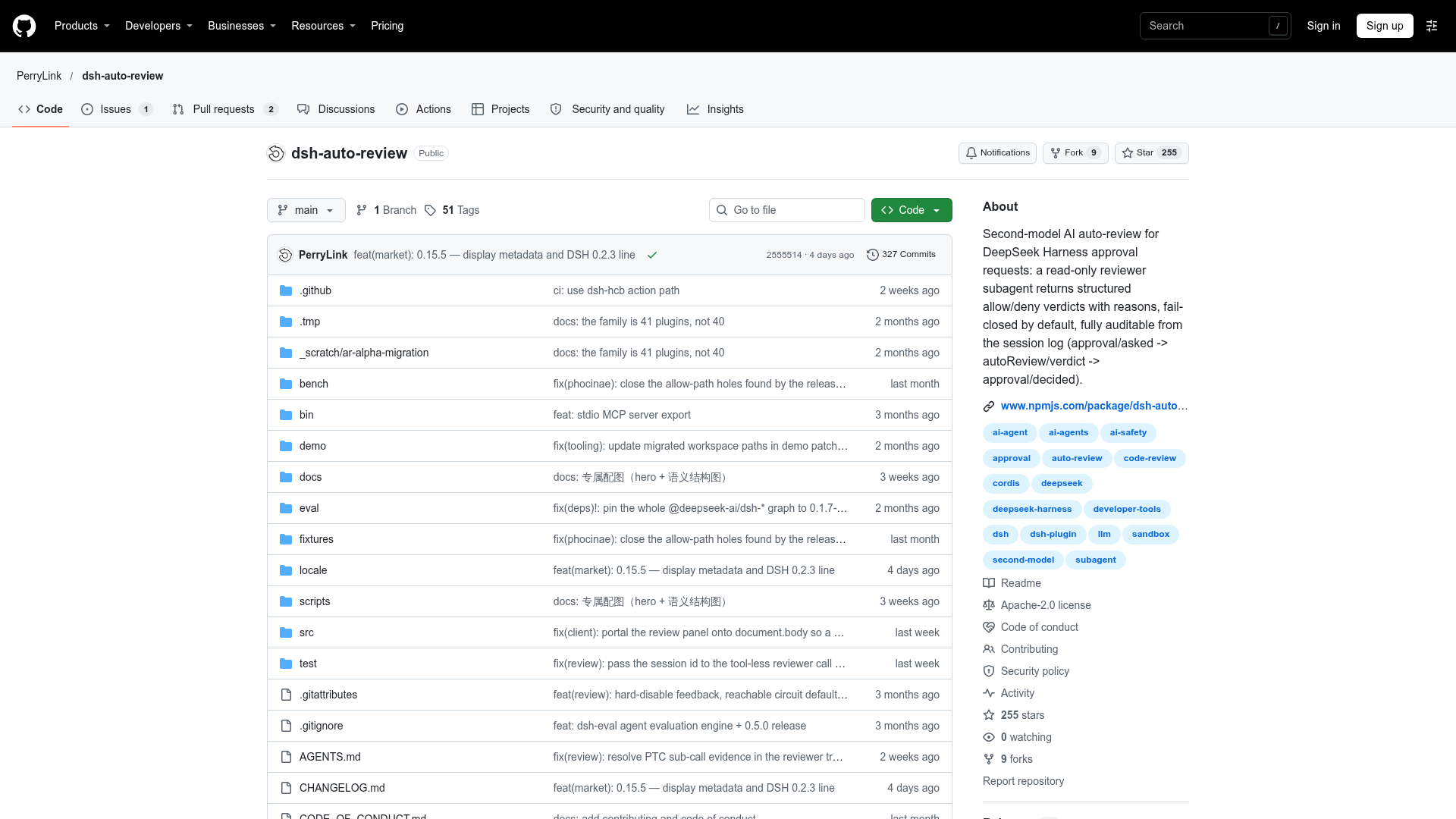
Second-model AI auto-review for DeepSeek Harness approval requests: a read-only reviewer subagent returns structured allow/deny verdicts with reasons, fail-closed by default, fully auditable from the session log (approval/asked -> autoReview/verdict
dsh-auto-review at a Glance
- Pricing
- Free
- How you use it
- DeepSeek Harness plugin installed through the dsh CLI or npm
- Who it's for
- DeepSeek Harness users
- Works with
- DeepSeek Harness
dsh-auto-review Key Features
- AI approval review
- Auditable decision logs
- Fail-closed fallback
- Structured allow/deny verdicts
Can't Find What You're Looking For?
We build custom AI agents tailored to your specific business needs. From ideation to deployment, TinyAI.Tools is your partner in AI innovation.
No commitment required. Let's discuss your ideas.
dsh-auto-review Alternatives
dsh-memento
Bounded, layered, approval-gated, auditable cross-session memory for DeepSeek Harness: a ctx.memory capability seam with a zero-dependency SQLite provider, a memory tool, and frozen snapshot injection. Active (unfrozen 2026-10-12); see README for alt
dsh-wechat-plugin
WeChat channel for DeepSeek Harness.

Guardrails AI
The AI Reliability Platform
cordum
The action firewall for AI agents. Enforce policy and human approval before risky tool calls, shell commands, workflows, and production changes, with auditable evidence. - cordum-io/cordum
jev-guard
Auto mode for every coding agent, built on Jev: risk-scores every tool call with session context (deny / ask / allow), flags prompt injection in results, checks skills and plugins. Claude Code, Codex, Copilot, Gemini, Cursor, pi, OpenCode, ACP. - lee

node9
Access control for AI agents. You decide what your agents can do; node9 enforces it before they act: allow, review or block each tool call, with every decision on the record. Works with Claude Code, Codex, Cursor and more.